The context
A framework is the list of an organization’s jobs, the skills each one requires, and the level expected for each skill. The rest of the platform depends on it. At most clients, it lived in a huge Excel file nobody dared to touch.
The first version of Lexi already gave a diagnosis. But every fix was still manual, and sign-off from the business happened outside the tool. Nothing kept track of changes.
My role
I led the redesign end to end, with the data / AI team, HR experts and pilot clients. I ran the interviews and sat in on validation sessions. Then I got the data team behind the experience choices, and presented the redesign to leadership.
The interviews reframed the problem. An AI generates a framework fast. What gets stuck is getting managers to agree on each job, and then keeping it up to date.
The key decision
The AI generates jobs, rewrites labels and spots duplicates. None of it counts until someone in HR has reviewed it.
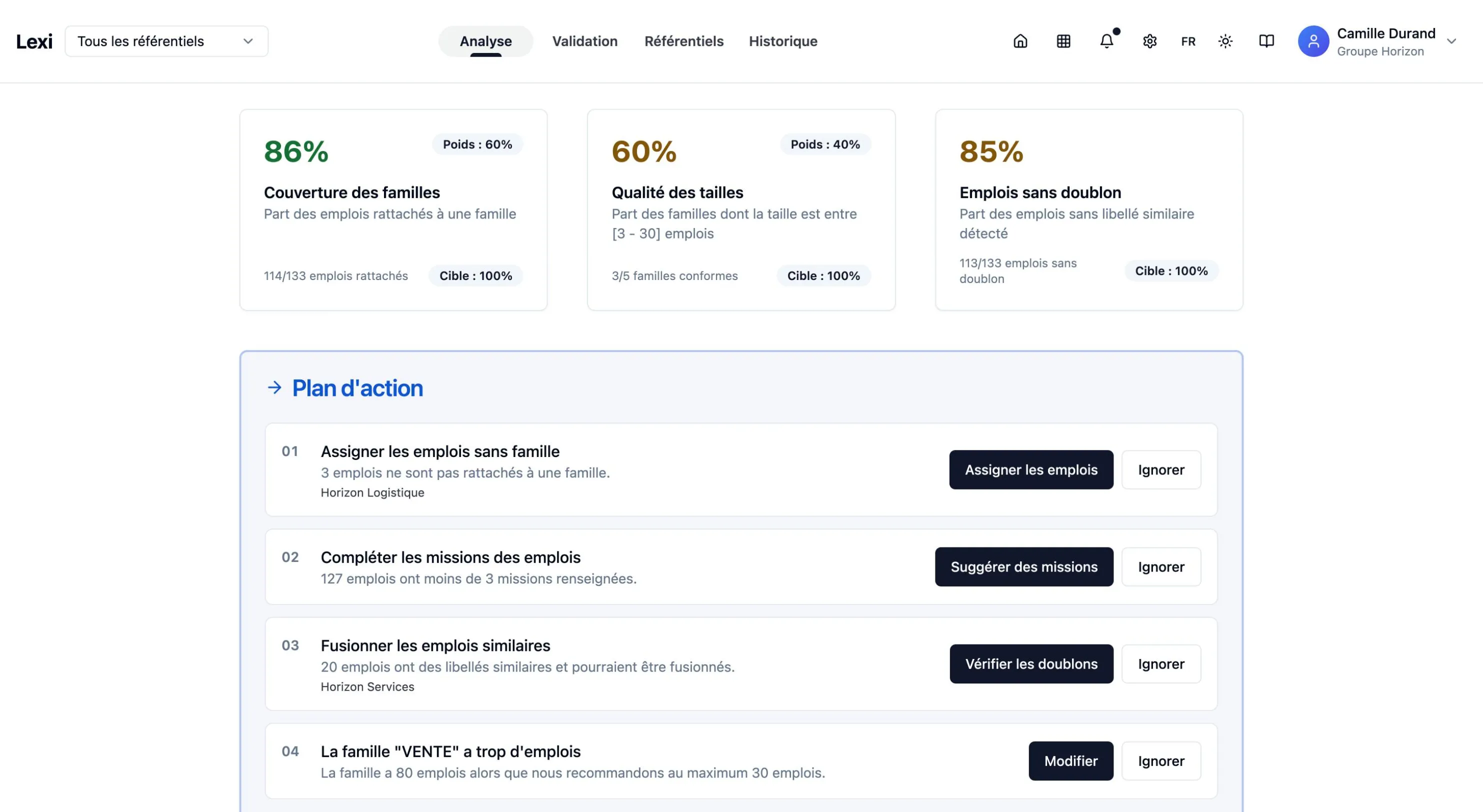
So Lexi opens on an analysis of the framework. Each weakness becomes an action, launched in one click, then reviewed before it’s applied.
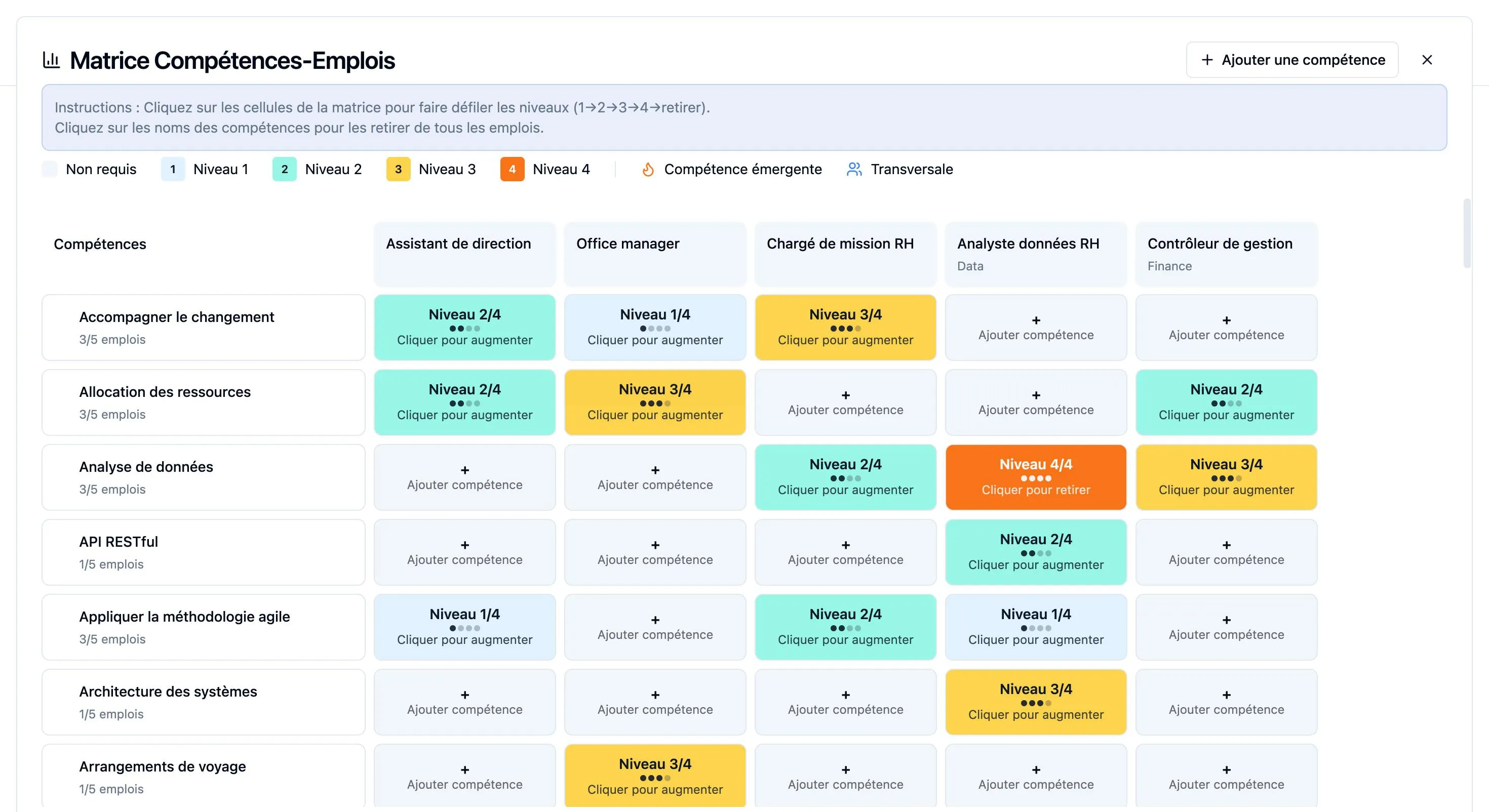
Managers and experts then validate in a skills / jobs matrix. HR tracks progress and closes the session.
The trade-off
Clients and CSMs wanted to plug Lexi into Smartmobility, Neobrain’s platform, right away, so it would replace the existing framework there. That’s the goal, and I stand by it.
But a source of truth for the whole platform is hard to undo. I chose to wait until we had learned enough from the pilots.
What it changed
Lexi was relaunched with the pilot clients, then opened to everyone. It became a selling point for Neobrain. Today it’s also the foundation of Nexia, the agent that projects the impact of AI on jobs.